Showing posts with label Fitness. Show all posts

Friday, November 24, 2017

All Of The Lights! Our Love Affair with Artificial Light


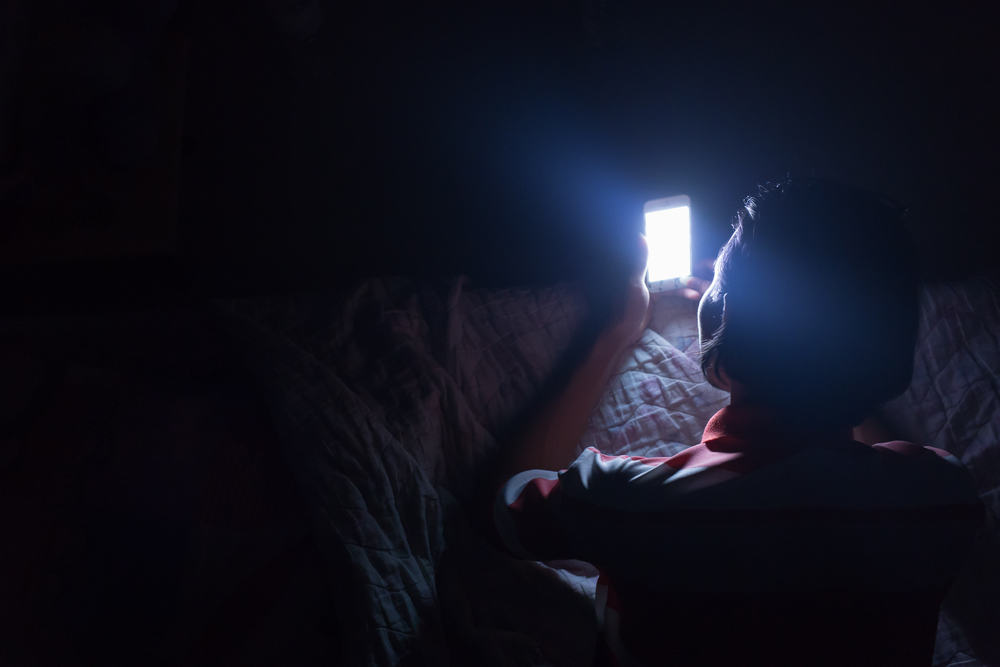
This is a tough article to figure out what the opening line should be. Write about the fact we are not supposed to live life through a viewfinder/computer we have in our pocket? Write about not living in a video game scape or Netflix world? Or Do I start this with a rambling story reminiscent of a Black Mirror episode?  If you listen to Ray Kurzweil the singularity is on its way by 2045, also noting that 2029 is when artificial intelligence will achieve human levels.What is downright scary is that Kurzweil has an 86% accuracy rating with his predictions. The technological singularity is a hypothesis that the  invention of artificial super-intelligence will abruptly trigger runaway technological growth, resulting in unfathomable changes to human civilization. If we look at the events of the past 10 years we see that electronics are having a staggering effect on our civilization social media has a tangible connection with Arab Spring, the Occupy movement as well as the rise of ISIS with remote radicalization. Are you ready to go down the rabbit hole?  Do you want the blue pill or the red pill?  We will be going down a rabbit hole but not full Eddie Bravo today. We are looking at the long reaching effect that artificial light is having on us due to increasing use of cell phones, tablets and other various electronic devices. Simply put the blue light emitted from electronic devices tricks the brain into believing its daytime. Approximately 95% of Americans owns a cell phone or a hand held device of some kind,  this up 35% from the last study on cell phone ownership in 2011. What makes this all the more troubling is the fact that one in three Americans is not getting enough sleep as of a 2016 study published by the CDC. Approximately 100,000 deaths occur each year in US hospitals due to medical errors and sleep deprivation was noted to make a significant contribution. One of the main factors is artificial light that is emitted by cell phones, tablets and other common electronic devices.The light has a negative effect on the circadian rhythm of the body, circadian rhythm is defined by the National institute of health physical, mental and behavioral changes that follow a daily cycle. they respond primarily to light and darkness in an organism’s environment. Circadian rhythms are influential with sleep wake cycles, hormone release, eating habits, digestion, temperature regulation and other important functions. We need to be in rhythm to function and perform at an optimal level. I wrote this article because with fitness there are many facets not just working out, or only nutrition health and fitness cover many other areas.


In a 2015 PEW Research Center study nearly nine in ten Americans are online this is up from about half in the early 2000’s, this goes hand in hand with half the public owning tablets and 95% ownership of a cellphone of some sort. Seven in ten Americans now use social media; In 2005 just 5% of Americans said they used these platforms they are most popular amongst younger adults with 86% of 18-29 year olds use social media, 80% of those 30-49 years old and 64% of adults ages 50-64 years old.  The most important statistic is that 100% of your are tired of statistics, this is not stat101. I just wanted to drive home the point about electronic usage. In an article titled “The impact of smart phones and mobile devices on human health and life.” By Leonid Miakotko he notes six out of ten respondents confirmed that they had symptoms such as headache, distraction, and inattention after using smartphones/HHDs more than two hours. In the table he provides in the article there is a direct correlation shown between smartphones/HHDs usage time and negative effects stemming from extended usage. The light emitted from electronic devices is a modern malady in its truest form as our ancestors rose with the sun and ended their day when it went down. This is simply not the case now as 60% of people spend more than 6 hours a day in front of an electronic device. What is blue light you may be wondering; blue light is everywhere it can come from the sun, electronic devices, as well as fluorescent and LED light. 
Waves Don’t Die (facts about light)
  • Light is defined as electromagnetic radiation that can be detected by the human eye. 
  • Light transmits spatial and temporal information 
  • Electromagnetic radiation is separated into wavelengths (gamma rays to radio waves)
  • The wavelengths that can be seen by the human eye is very small, titled visible light
  • The waves emit energy and range in length and strength
  • The energy of the wavelength is dependent upon the length of the wave.
  • Visible light includes violet, indigo, blue, green, yellow, orange and red
  • Blue light is very short so the energy level is very high
  • Due to the fact that blue light or High energy visible lights are shorter this causes them to flicker more than longer weaker wavelengths. This has a correlation to eyestrain, headaches and fatigue from overuse of electronic devices.
  • The concern is that long term exposure to blue light could cause long term damage to the eyes. As our eyes do not have any protection from natural or artificial blue light.  


In order to move forward we will need to define some roles as we have some spillover, and confusion could ensue. We already have defined circadian rhythm as them as physical, mental and behavioral changes that follow a daily cycle. They respond primarily to light and darkness in an organism’s environment. What is of note is that circadian rhythms are found in most living things including animals, animals, plants and many tiny microbes. The study of circadian rhythms is called chronobiology. We also have biological clocks which the NIH defines as an organisms timing device, they are found nearly in every tissue and organ. Researchers have found similar genes in people, fruit flies, mice, fungi and other organisms that are responsible for making clocks components. One thing to be aware of is that circadian rhythms and biological clocks are not related. But that biological clocks produce circadian rhythms and regulate their timing (spill over). Now we have the master clock who is like the big boss you face at the end of the video game. The master clock coordinates all the biological clocks in an organism, keeping them in sync. In animals with a vertebrae this includes humans, the master clock is approximately 20,000 neurons that form whats called the suprachiasmatic nucleus or SCN. This nucleus is located in hypothalamus getting direct communication from the eyes. The circadian rhythms control many of the functions of the body including sleep, hormone release, eating, digestion and body temperature. Disrupted rhythms have been linked to chronic conditions such as sleep disorders, obesity, diabetes, mental illness and season affective disorder. Circadian rhythms determine sleep patterns, the master clock controls the production of melatonin a hormone that can make you sleepy. The master clock receives direct information a light when there is less light the brain makes melatonin to get you drowsy, if you use blue light emitting devices this can disrupt that cycle. The American Sleep association notes that 50-70 million Americans have a sleep disorder, the most common sleep disorder is insomnia with one-third of adults reporting short term issues and ten percent reporting chronic issues. The website of sleepassociation.org has a lot statistics that drive down sleep disorders to different age ranges. What it does have that I will put up is a chart of the sleep needs by age group:
Adult 7-9 hours 
Teenager 8-10 hours
Child 6-12 years old 9-12 hours 
Child 3-5 years old 10-13 hours
Are you getting enough sleep? 


I feel like the guy who is trying to burst your bubble, you just want to play candy crush, words with friends or just check your snapchat. Your question for me should be “what solutions do you have me?” If you want to live until 100 plus like I do your going to want solutions for issues that come up in order to live an optimal life. I gave you most of the stats on why blue light exposure is not good for you. The question remains what lifestyle adjustments can be made to improve your quality life. You can limit the amount of artificial blue light you are exposed to by taking the following measures wear blue blocking glasses. In an article from Dr. Mercola titled “Benefits of Blue Light Blocking Glasses he notes that one of the benefits is to prevent damage to the essential fat in your retinal pigmented epithelium which is responsible for converting sunlight into vital DC electric current your body needs.  Furthermore the same article notes that blue light will increase the distance of the proteins in the respiratory electron transport chain making them far less efficient in producing mitochondria.  A recent study showed that blue light blocking lenses have a positive effect on people with Bipolar Disorder who wore the glasses from 6 pm to 8am for one week. They had significant improvements in the symptoms of mania. A 2009 research study found dramatic improvements in insomnia and mood in half the patients who wore blue blocking glasses. You can also increase the amount of antioxidants you eat and take as vitamins. The nutrients Zeaxanthin and lutein are found in green leafy vegetables like kale and cooked spinach. It is also found in orange and yellow colored vegetables, as well as organic, pastured egg yolks are also a good source. One of the other avenues to protect yourself are the applications such as f.lux, that blocks blue light there are many other apps that can do the same. When we manage the amount of  artificial blue light coming in we have better control over the many systems in our body circadian rhythms, the biological clock, the master clock as well as sleep and hormonal balance.  Next week you will be getting a Holiday Survival field manual an advanced version of the Holiday Survival Guide.


Friday, November 3, 2017

Pain in the Foot! A look at Plantar Fasciitis


Autumn is here in full force we have survived Octoberfest, and Halloween! These social events put us in contact with new and interesting people. How many of us have been in one of those situations where the conversation not only sucks? But its downright ugly, painfully brutal If you got me on an off day sorry.  When I watch a person move it is a conversation with the world around them, their constant adaptation to different stimuli internal and external allows them to express themselves. While movement can be graceful like a ballet dancer or sprinter in stride it can be downright ugly as well.One of the worst forms of self expression is the knife heel dance that the plantar fasciitis or plantar heel pain sufferers go through every morning or after a long period of sitting. The first five steps are agony, they cannot put the heel down, stabbing pain in the entire bottom of the foot, sometimes going up the leg. This walk of shame can occur everyday multiple times in a day.  At one point I was suffering from plantar fasciitis, as the result of an increase in mileage while being a bit overweight and running in the wrong shoes. It was brought under control through some treatment, trial and error home treatment, and yes I bought into the contraptions. We will speak more about that cottage industry later. Unfortunately 10% of people will suffer from plantar fasciitis in their lifetime with a higher incidence in the athletic population. This is not just a niche problem for the running community the annual cost for treatments is estimated to be between $192 and $400 million a year. The centers for Disease Control and Preventions National Center for Health Statistics has found that plantar fasciitis accounts for 1 million doctor visits per year.  The cost of custom orthotics is between $200 ad $800 per pair and surgery is $10,000.00. This does not even address ongoing cost to the labor force if you are having foot pain and need to be on your feet all day it's likely you are not working that day. Now you can see the importance of the subject, why it needs to be addressed, the ways in which we can all have beautiful conversations.  We will be exploring just that in this article along with some steps you can take to deal with the modern scourge plantar fasciitis. 


So what is plantar fasciitis? It occurs when you overwork the tendons and the thick tissues of the  bottom of the foot. The pain occurs at the bottom of the foot by the heel bone, this was thought to be caused by inflammation but the current theory is that is rather degeneration.  The symptoms of plantar fasciitis are pain in the heel starting gradually ad may radiate to the arch of the foot. Tenderness under the sole of the foot and on the inside the heel when they are pressed on. The pain can either range from discomfort to very painful depending upon the level of damage. The pain is usually worse in the morning as the foot is a relaxed position while we sleep causing the plantar fascia to shorten.The name gives it away in that it’s an inflammation of the plantar fascia of the foot. Leonardo Davinci is quoted as saying “The human foot is a masterpiece of engineering and a work of art.” He may have been admiring one specific foot when he said this, but it does hold true. The foot has 26 bones accounting for a quarter of the bones in the entire body. The foot contains 33 joints, 100 muscles, tendons and ligaments. One of the key players has been left out fascia, leaving us to ponder what is fascia. The simple answer is that it is a thin sheath of fibrous tissue enclosing a muscle or other organ.  Fascia allows the muscles to move freely alongside other structures and reduces friction. It can be found immediately beneath the skin, around muscles, groups of muscles, bones, nerves, blood vessels, organs and cells. The plantar fascia is the muscle and fascial tissue under the foot that forms the arch.  After the first few steps in the morning will lessen or subside. Lets look at the possible causes and risk factors that come into play with plantar fasciitis.   Some of the common causes are repeated stress and strains to the feet where they become to much for the foot to handle. The risk factors are tight calf muscles, obesity, a very high arch, repetitive impact sports, increase in activity ie running, jobs where your on feet for extended periods of time and a faulty walking pattern. 

Over the summer I had to opportunity to visit with a friend through the course of our conversation her fathers “old man” injuries came up. He is a retired gym rat who along  the way acquired some of the more common gym maladies a shoulder issue from regular use, plantar fasciitis and the consummate knee pain. In his day Tom was not a meathead, but given his age that may be the way he trained as that was the trend of the day. As a  fitness community our knowledge base grows exponentially year in year out with nutrition, exercise science and supplementation. When I started working out going behind the head for pushes and pulls was normal, now you have to be a renegade or a dinosaur to train that way.  I volunteered to write Tom a program for his plantar fasciitis as well as talk to him about his other injuries. After I made the offer I thought this needs to be a post for everyone to benefit from. One thing that was uncovered was the fact that Tom had over a dozen contraptions, like me he made the donations to $400 million. I did some research the average contraption cost is $16.99 -$24.99 per item from providers like durable medical equipment companies and online stores like Amazon. My Uncle Moe is very funny man and happens to be very quotable. When all of his kids lived at home he used to look at the phone bill line by line asking who called this number and who hit star 69 five times? “these kids are nickel and diming me to death!”  Moe is right they are nickel and diming people to millions. Lets get back to the hellish groundhog day opening to the plantar fasciitis sufferer. Its 5:45 am the alarm goes off your hear some bongos then the chant the champ is here! The champ is here! The champ is here! Off like a shot out of bed until your feet hit the ground, the champ goes down like Joe Frazier. Pain in the foot gotta get up before the alarm wakes up the rest of the house,  after a few steps the pain subsides alarm is off. Those of your who go through this on a daily basis I am sure you came here looking for solutions please see below. 


Solutions Table Release-Stretch-Strengthen-Reintegrate


While in Bed before your feet hit the floor 

-Point and flex your toes ten times 
-Make circles with you feet ten times clockwise, reverse that ten times 


When your feet hit the floor 
-Have either a golf ball, lacrosse or a hand ball in the night stand 
-GENTLY roll the ball under your feet ten times front to back 

What the above does is gets the tendons and fascia in the feet moving so that there is some blood flow. It also takes the foot out of the relaxed position by slowly lengthening the plantar fascia.

No more barefoot walking in the house, purchase sandals with a thick heel as flip flops and barefoot walking will collapse your arch

This will not be enough to get your Plantar Fasciitis to subside you will need an exercise protocol. Release-Stretch-Strengthen-Reintegrate

Release Foam Roll the Calf Muscles  

Sit in front of a foam roller, put your legs over the foam roller stacking the legs on top,  start at the top of the back of the shoe roll until you find a tender spot. Then relax and breathe hold for 30-120 seconds, then you find another tender spot. 


Stretch 


Calf Stretch Hold the stretch for 30-120 seconds or until the release is felt. Stand feet hip with distance apart, square your shoulders and hips up to the wall, step one foot back, as you keep the heel down push your hands into the wall and hips towards the wall. 


Strengthen or rehab measures: for this you will need a seat, a hand towel, a dixie cup and some marbles. 


Put the towel on the floor(preferably wood) in front of the chair, take your shoes and socks off. Put your foot in the middle of the towel and scrunch it up with your foot. Did I say this would suck? I must’ve forgot to mention that. Switch feet. 


Onto the monkey foot game!!
Take the marbles dump them on the floor around the dixie cup. 
Now your going to monkey foot the marbles into the dixie cup, by picking the marbles up with the toes of the foot and placing them in the cup. 
Repeat on the other side. 


Reintegrate
This one is really simple Farmers Carry. If you have access to kettlebells they are preferable to dumbbells, use what you have access to.  You will want one bell in each hand the weight should be substantial enough that you have to work to walk with it. The key is going to be walking through the feet this should give you a grounded feeling.  The farmers carrys are great because they will strengthen the feet as well as work on your gait to some degree. 


Bonus Track
My favorite albums have bonus tracks. This is your bonus track for this article, while it may not be The Clash’s Train in Vain. It should help you if your in pain and can’t seem to shake it. All you need is a round water bottle thats frozen solid. Basically with your sock on you roll the frozen water bottle under your foot this will provide some temporary pain relief. You will need to use some of the Release-Stretch-Strengthen-Reintegrate protocol as stated above. Otherwise you are only managing a symptom not the whole issue. 


The above solutions have worked well for me, I am a health and fitness professional but I am not a doctor. So the solutions that are posted here are limited if you are still in pain not getting better it may be time to seek out a professionals opinion like a physical therapist, chiropractor and or a physician. As they will be able to do some manual muscle tests, gait analysis and other tests to diagnose you. One of the ideas as far a training and what I look for in medicine is to treat the whole disease or issue and not the symptom. When dealing with an engineering masterpiece like the body or foot we all want a comprehensive approach with better results. As we age we should all be interested in moving like a dancer with grace, like a boxer with balance, a sprinter with explosive power and a child moving with ease.  In the coming months we will have a holiday primer to help you survive the holidays in shape, a look at working out with spinal injuries, and unconventional training. Please read and share this article and any of the others you like on my site. 


Thursday, August 29, 2013

Tabata and the Bookworm A Love Story !


Over the years we have seen an increase in exercise initiatives at first we had the Presidents Council on Fitness, the First Lady has Lets Move now, the NFL has the 60 campaign looking to get kids moving 60 minutes a day. They also have them at jobs with fit bit competitions, wellness evolutions, or companies encouraging folks to work out at lunch. They are all great programs I applaud you for your efforts in fighting obesity  and getting people moving.  I psyched you out we are not talking about physical fitness programs. Don’t be disappointed, and please don’t be butt hurt. We are talking about exercise it has many benefits one of which is in learning.  This subject came from two places a New York Times article outlining two studies one showing exercise benefiting learning, the other study showed a benefit but the study was flawed. When we look at it you will see why! I promise. This subject also came to me from another angle my interest in the conscious and subconscious mind as well as methods of reaching both with information namely learning. I always wonder about yoga where you put in work physically but the juicy part of yoga is in Shavasana or relaxation in the end. Where it is said you get the greatest benefit, the idea crossed my mind if we could tap into that to access different parts of the brain to learn. Some people are experimenting with learning language and sensory deprivation tanks with some success. To date it has self experimentation by biohacker’s without medical based evidence.  Exercise is not only good for body, its good for your soul you know you feel good when your on track with your fitness goals, its also good for your mind and getting your learn on. 


The first study up is titled Physical Exercise during Encoding Improves Vocabulary Learning in Young Female Adults Citation Schmidt-Kassow M, Deuser M, Thiel C, Otterbein S, Montag S. 2013 Published in Plos One. The participants in the study 105 right handed german females between the ages 18-30 were broken up into three different groups Relax, Post and Sim. The Relax groups task was to learn a word for 30 minutes and relax in a chair for the same amount of time. The Post group cycled at a hard effort for 30 minutes prior to learning new words for 30 minutes. The members of the Sim group learned while they cycled for 30 minutes. This resulted in all of the women learning some new words  but the women in the Sim group faired the best. They had better recall of information, the Relax group performed better than the post group which faired the worst. The testing of the subjects took place two days after learning the words.  The next study up is The Effects of Acute Exercise on Retention and Learning Mastrocola M, Exercise Science Elon University NC. They took 11 female college students who read a chapter in a nutrition text book during 2 separate elliptical sessions lasting 30 minutes which was to be moderate to hard or sitting. The group that studying quietly tested better immediately after the rest than the exercise group. After 24 hours there was no discernible difference in the groups retention. The study was flawed in my eyes as they had two problems no moderate to mild exercise group and if you have exercised hard even on an elliptical reading is not easy. You will get queasy or feel see sick and lose your place, a better option would have been auditory learning materials, in an effort to avoid the previously mentioned pitfalls. I do applaud the efforts of the researcher in looking at this topic. 

I believe the difference in the studies are the result of two differing forms of exercise, the fact that a moderate to hard effort lights up your central nervous system. This is a variable that cannot be discounted as it has a direct correlation on the brains ability to focus and learn.  Do you learn a new skill when your all light up with your body and mind ready to move?  No look at Jiu Jitsu practitioners they practice moves breaking them down into mini moves going over them slowly and working them before going live.  The same can be said for wrestling, combat sports, and football. The likelihood is that during physiological arousal certain chemicals are released that affect memory formation according to Dr. Schmidt but this has not been proven. If you have a test in a few hours study and review in quiet, but if the test is a couple of days away try some mild exercise.  

I mentioned exercise initiatives earlier in the article, one program has added a new element to their program academic benefit of learning during exercise. At the Take 10 Program the core of the program are 10 minute activities combining exercise and learning. One appeared in the journal Preventative Medicine called Invisible Jump Rope  the objective is to recall basic counting, addition and subtraction facts while jumping. The teacher calls out numbers from 1-10 starting with one, everyone jumps as they count up to that number. Then you start at 20 and count backwards as students do the invisible jump rope backwards. This is the beginner level of a three level system. It is backed by case studies posted on their website http://www.take10.net/case

In this article we have looked at three different studies with varying methodologies, age groups and sexes. Some of the results have fallen in line others have changed due to different variables. One thing is evident that the test subjects who studied during mild exercise faired the best out of the exercise groups having the best retention. If you think about it with runners in mind it holds true, many runners myself included feel that while you run you can really work out problems or issues once you catch a rhythm. I feel that exercise can help to stimulate learning, but like everything else you need to apply the appropriate form of exercise don’t go all out in a training session then expect to sit down and be ready to study. People learn in different ways so please experiment and find what works for you and your kids as far as learning goes.  This weekend we will be looking at Gut Microbiota, next week a summer wrap up list of movies, music, books and other entertainment.  Please read and share. 


What is your mind on?

Wednesday, July 17, 2013

Where do you get your inspiration? Music is the Answer!


Where do you get your inspiration? It can come from many different places art, music, photos, an article or a book about an inspirational person. The definition of inspiration is stimulation or arousal of the mind, feelings, etc, to special or unusual activity or creativity. Its also defined as the process of inhaling or breathing in. In other words it is the stimulus our mind is consuming that sparks action. We are looking at music’s stimulating effect; it can shape our mood, sharpen our resolve, bring us out of a depression, pick us up for coming the day and help us sleep through the night. Specifically we are looking at what you would call the Rocky effect, for men of a certain age group you put on the Rocky soundtrack they take action. Who is shadowboxing the meter in the street? One of you is looking at the eggs in the fridge, and someone is envisioning running through Philly. Ok I was shadowboxing just thinking of the music. I remember  articles about actors and directors that use music to set up their mindset with music. If I remember correctly while making Training Day Anton Fuqua listened to Eminem and while he made King Arthur he listened to epic classical music. Lets look at how you can make music work for you. 

Add caption
The main academic paper that I found which contains most of if not all the studies on music and exercise was done by Len Kravitz a PHD at the University of New Mexico. In his paper titled”The Effects of Music on Exercise?” He reviewed numerous studies and surveys to determine  what if any effect music had on exercise and physiology.  He broke it down into several sections, first it was to see if music increased respiration and heart rate. The study he cites are Ellis & Brighouse 1952 finding that heart to only moderately follow music increasing in response to fast music and decreasing with slower music. The Dainow 1977 study found slow sedative or stimulative music moderately increases the heart rate but this was the case with all types of music due to an emotional effect.  Next up he looks at the effects of different types of music on physical strength he cited the Pearce 1981 study on grip strength that focused on the influence of stimulative music, sedative music and silence. This study showed sedative music decreased strength significantly compared to stimulative strength and silence. He did note a determination in the Sears, 1957 study which demonstrated that stimulating music increased muscular tension. This next one will be of interest to PT’s and OT’s Dr. Kravitz noted that musics effect on rhythmic stimuli and the rehab of gait disorders from Rudenberg 1982 and Staum 1983 rhythmic music and percussive pulses favorably affected coordinated walking and proprioceptive control.  He went on to state that music or auditory stimuli improves gait regularity due to the use of the beat, helping people to anticipate the rate of movement. The effect of music on exercise performance he found that music has been shown to improve muscular endurance from the Chipman 1966 paper. The Leslie 1967 paper found it did not improve running speed, although some college age men and women found they could walk farther with less effort with music. This shows us that music can in some instances can directly effect our performance, and it can also make working out or running a more enjoyable experience. 
Earlier I mentioned how music can affect our mood, many of us rely on music to get us through the day at work or on a long commute, and some of us cook and even shower with music. Music does have a role in health care, in the classroom and in psychotherapy as well. The principles of Chinese medical theory use a five tone scale to motivate the mutual interaction between the Yin Yang and the Five Elements. The music helps to regulate the function of the organs in the body and restore metabolism. Musical treatment not only avoids side effects of medicine but allows for long term treatment, and a more efficient recovery.  Music therapy is being used to treat several different conditions such as Autism. People with Autism are noted to have a heightened interest and response to music. In autistic people music has been used to aid in verbal and nonverbal communication skills and in engaging normal developmental processes. In older adults diagnosed with Alzheimer's dementia, music therapy has been found to improve mood, reduce agitation and improve cooperation with activities of daily living. Music therapy may increase response to antidepressant medications. In older adults music therapy has been shown to have long lasting effects. It may also be beneficial for patients suffering depression post total joint replacement or hemodialysis. Music has also been used to increase sleep quality, in older adults music has been found to increase sleep duration, quality and greater sleep efficiency.  This information can be found on the Natural Standards website.

Onto building the consummate kick ass workout playlist, thats why your here not to hear about studies, music therapy and Chinese medicine.  The normal heart rate in adults ranges from 60-100, the UFC fighter Michael Bisping has a resting heart rate of 54. When most of us workout or run we want fast paced music, studies have shown the ideal tempo is approximately 120-140 beats per minute. You do not have to count the BPM, they have a BPM assistant for MAC and the BPM Calculator. If you use i-tunes you can sort your music by the BPM. When you put your tracks in order consider what your using the playlist for.  In all likelihood you will want a slow build, yes you want to get the BPM up to 120-140. If your doing HIT cardio, tabata, or running hills you will want to time out the high and low BPM.  If you really love a song you can always speed up the BPM with Sony Soundforge without changing the pitch. After you have been using the same playlist for a while, its OK to hit the shuffle button! 
Originally the plan was to give you some pro-athletes playlist for working out, but it was scrapped. I am more interested in what my readers listen to. In the comments section please put up your favorite playlist. It is to be hoped that this article has shown you that music really is the answer. In the coming weeks I will be completing an article about gut flora, this will go past the previous entry concentrating on immune health.  Also in the works are articles focusing on functional training versus traditional split style, as well as the supplement piece I have been promising. As always please read and share this blog. 
  
Tuning out the heat and pain at Badwater
Sources


http://www.unm.edu/~lkravitz/Article%20folder/musicexercise.html

Wednesday, July 10, 2013

Meditate on that for a while .


"Meditation brings wisdom; lack of meditation leaves ignorance. Know well what leads you forward and what holds you back, and choose the path that leads you to wisdom." Buddha  
Today we are going to look at meditation, the benefits you can get from a meditation practice and the different types of mediation. Meditation has always enamored me especially the fact that someone can sit in silent reflection, until I found it was much more than silent reflection. As a kid and as an adult sitting still has not been easy, I am nosey and a bit hyper a trying combination at times. This is one of the reasons mediation has peaked my interest, once I heard about the benefits then I was all in. Meditation can improve our creative thinking, our energy, our stress levels and our success as well. Studies have shown that meditation is associated with improvement various psychological areas, which include stress, anxiety, addiction, depression, and cognitive function. Research also suggests meditation has been shown to reduces blood pressure, eating disorders, pain response, stress hormone levels and cellular health. Meditation has also been shown to preserve function in an aging brain, that one was for the baby boomers who make up 35% of the U.S. population. We all need to consider the ramifications of letting an opportunity like this to pass us by, an aging population affects all, and we will be the caregivers for the aged.  You can change the way you perceive yourself, change the way you think about and how resolve problems. We do not need to spend years in mediation either to reap the benefits; people have had a positive outcome within weeks of starting a meditation practice.  

The benefits of meditation have been quantified in some recent studies by MIT and Harvard researchers.  A study published in the April Brain Research Bulletin, they found that people that trained to meditate over an eight week period were better able to control specific type of brain waves called alpha rhythms. According to Christopher Moore, an MIT neuroscientist and senior author of the paper.“The data they gathered indicated  that meditation training makes you better at focusing, in part by allowing you to better regulate how things that arise will impact you.” The alpha brain waves were the focus of this study, they flow through cells in the brain’s cortex where sensory information is processed. The alpha waves help suppress irrelevant or distracting sensory information. A study was done in 1996 of a group of Buddhist Monks who meditated regularly had elevated alpha rhythms across their brains. This study focused on the waves’ role in a specific part of the brain-cells of the sensory cortex that process tactile information from the hands and feet. They recruited 12 subjects who had never mediated before. Half of the participants were trained in a technique called mindfulness-based stress reduction over an eight-week period, while the other half were told not to meditate. The MBSR program called for participants to meditate for 45 minutes per day, after an initial two-and-a half-hour training session. The subjects listen to a CD recording of a guided meditation. Brain scans were done before start of the study, three weeks in and at the end of the eight weeks. At the eight week mark the subjects who had been trained in meditation showed larger changes in the size of their alpha waves when asked to pay attention to a certain body part. They also observed rapid changes in wave size in the meditators.  This can have a beneficial affect with people who suffer from chronic pain, in that they can be trained to be aware of where they focus their attention and not to get caught on a painful area. This will also allow people to be more able to handle stress. The plan is for follow up studies on cancer patients and people with chronic pain.  In 2010 a study was done on people who practiced focused meditation for 5 hours a day for 12 weeks. After conducting concentration tests, the participants were shown to have an easier time sustaining voluntary attention. We need to train and strengthen focused attention like any other skill. The study found that 20 minutes a day was all that was needed to get beneficial results. A 2008 study showed that 10 days of intensive mediation found that after completing the mindfulness training, the subjects had improvements in mindfulness, contemplative thoughts, the alleviation of depressive symptoms, and boosts working memory and sustained attention.  This should shed some light on what a focused meditation practice can do for you and hopefully get you interested in meditation. 

Lets look at some basic types of meditation; the first one up is Mindfulness or Vipassana, it is the most popular form of meditation in the western world. The idea is about being present and letting your mind run accepting what comes to mind recognizing it and practicing detachment. This is taught with attention to the breath, making no changes to the breathing just observing what its doing. The next one up is Zazen generally accepted as seated meditation in the Buddhist tradition. It is a minimal kind of meditation called the anti method can be done for long periods of time. It was developed by monks, this made it hard for people in an active world to learn, with this form of meditation there is very little instruction. Next one up is a transcendental meditation comes from the meditative tradition of Hinduism. In TM seated in a Lotus position repeating a sacred word or a mantra. In the beginning the focus is to rise above all the impermanent. Over time as your practice advances the focus shifts to your breath, changing your breath to change your state of being. Kundalini is another form of meditation from Hinduism, the name is for the rising stream of energy that exists in a human being. The aim is to become aware of the rising stream and to ride it to infinity, by focusing the breath to flow through the energy centers of the body. Always moving it upward toward the energy center just above the top of the head. Qi gong meditation a form of Taoist meditation focused on the breath or the qi or chi, using it to circulate energy through the organs and energy centers of the body. This is often called the microcosmic orbit, the three major energy centers are a point two inches below the navel, the center of the chest, and the center of the forehead. The next one is guided visualization a popular form of meditation where you concentrate on an image or an imaginary environment. There are two types of guided meditation one uses a recording with music and guidance, the other is where you guide yourself to a certain point with breath manipulation. Then you use imagery to take yourself to your medicine place or a safe room in your own mind. Some say this is not part of “meditation tradition” this is not correct the native peoples have used this form of meditation for centuries.  The last one is heart rhythm meditation which focuses on the breath and the heartbeat. The breath is changed to be deep, full, rich and rhythmic with balance. The attention of focused on the heart as the center of the energetic system, identifying yourself with the heart. The breath becomes the focus as you learn to direct your breath feeling the circulation as you pulse in different parts of the body. This allows to become more powerful and sensitive by being in control of yourself always.

 We are living in strange times with information coming at us from all angles at light speed and it's not all good information either. Many of us are in need of a filter or a way to digest whats in front of us. I feel that meditation may be the key, not to control the world but to control our reaction to it. Meditation allows us a doorway into our own mind to work on problems, correct energy levels, learn to deal with stress, alleviate depression and most of all gives us the power. This blog will likely be going to three posts a week and a bimonthly weekend list. Please read and share this blog. I am available for consultation on health and fitness programs, as well as kettlebell and kettlebell instruction.