
This is a tough article to figure out what the opening line should be. Write about the fact we are not supposed to live life through a viewfinder/computer we have in our pocket? Write about not living in a video game scape or Netflix world? Or Do I start this with a rambling story reminiscent of a Black Mirror episode? If you listen to Ray Kurzweil the singularity is on its way by 2045, also noting that 2029 is when artificial intelligence will achieve human levels.What is downright scary is that Kurzweil has an 86% accuracy rating with his predictions. The technological singularity is a hypothesis that the invention of artificial super-intelligence will abruptly trigger runaway technological growth, resulting in unfathomable changes to human civilization. If we look at the events of the past 10 years we see that electronics are having a staggering effect on our civilization social media has a tangible connection with Arab Spring, the Occupy movement as well as the rise of ISIS with remote radicalization. Are you ready to go down the rabbit hole? Do you want the blue pill or the red pill? We will be going down a rabbit hole but not full Eddie Bravo today. We are looking at the long reaching effect that artificial light is having on us due to increasing use of cell phones, tablets and other various electronic devices. Simply put the blue light emitted from electronic devices tricks the brain into believing its daytime. Approximately 95% of Americans owns a cell phone or a hand held device of some kind, this up 35% from the last study on cell phone ownership in 2011. What makes this all the more troubling is the fact that one in three Americans is not getting enough sleep as of a 2016 study published by the CDC. Approximately 100,000 deaths occur each year in US hospitals due to medical errors and sleep deprivation was noted to make a significant contribution. One of the main factors is artificial light that is emitted by cell phones, tablets and other common electronic devices.The light has a negative effect on the circadian rhythm of the body, circadian rhythm is defined by the National institute of health physical, mental and behavioral changes that follow a daily cycle. they respond primarily to light and darkness in an organism’s environment. Circadian rhythms are influential with sleep wake cycles, hormone release, eating habits, digestion, temperature regulation and other important functions. We need to be in rhythm to function and perform at an optimal level. I wrote this article because with fitness there are many facets not just working out, or only nutrition health and fitness cover many other areas.
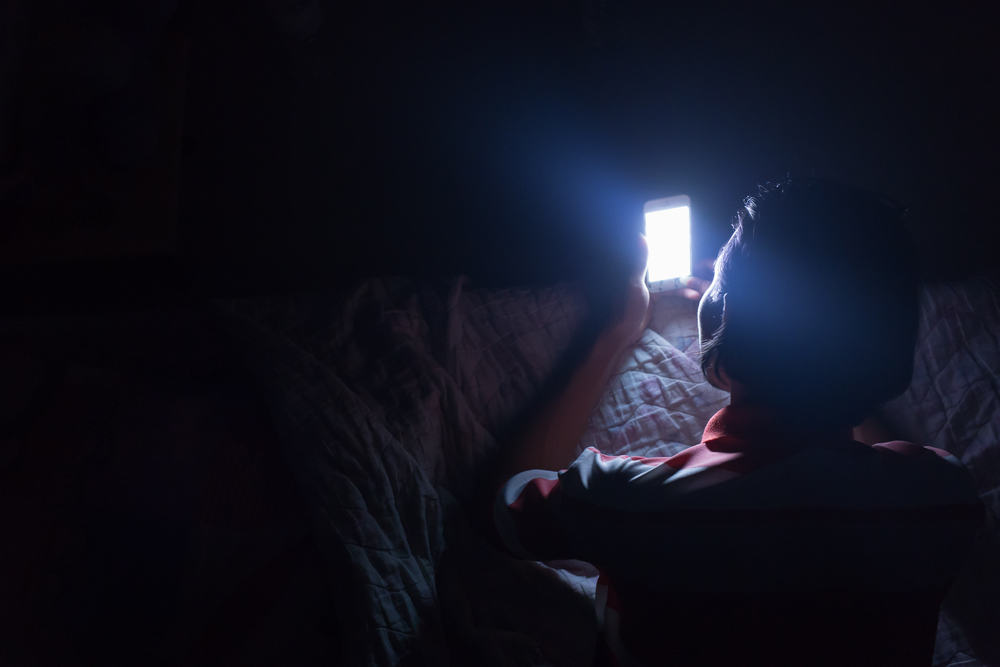
In a 2015 PEW Research Center study nearly nine in ten Americans are online this is up from about half in the early 2000’s, this goes hand in hand with half the public owning tablets and 95% ownership of a cellphone of some sort. Seven in ten Americans now use social media; In 2005 just 5% of Americans said they used these platforms they are most popular amongst younger adults with 86% of 18-29 year olds use social media, 80% of those 30-49 years old and 64% of adults ages 50-64 years old. The most important statistic is that 100% of your are tired of statistics, this is not stat101. I just wanted to drive home the point about electronic usage. In an article titled “The impact of smart phones and mobile devices on human health and life.” By Leonid Miakotko he notes six out of ten respondents confirmed that they had symptoms such as headache, distraction, and inattention after using smartphones/HHDs more than two hours. In the table he provides in the article there is a direct correlation shown between smartphones/HHDs usage time and negative effects stemming from extended usage. The light emitted from electronic devices is a modern malady in its truest form as our ancestors rose with the sun and ended their day when it went down. This is simply not the case now as 60% of people spend more than 6 hours a day in front of an electronic device. What is blue light you may be wondering; blue light is everywhere it can come from the sun, electronic devices, as well as fluorescent and LED light.

- Light is defined as electromagnetic radiation that can be detected by the human eye.
- Light transmits spatial and temporal information
- Electromagnetic radiation is separated into wavelengths (gamma rays to radio waves)
- The wavelengths that can be seen by the human eye is very small, titled visible light
- The waves emit energy and range in length and strength
- The energy of the wavelength is dependent upon the length of the wave.
- Visible light includes violet, indigo, blue, green, yellow, orange and red
- Blue light is very short so the energy level is very high
- Due to the fact that blue light or High energy visible lights are shorter this causes them to flicker more than longer weaker wavelengths. This has a correlation to eyestrain, headaches and fatigue from overuse of electronic devices.
- The concern is that long term exposure to blue light could cause long term damage to the eyes. As our eyes do not have any protection from natural or artificial blue light.
In order to move forward we will need to define some roles as we have some spillover, and confusion could ensue. We already have defined circadian rhythm as them as physical, mental and behavioral changes that follow a daily cycle. They respond primarily to light and darkness in an organism’s environment. What is of note is that circadian rhythms are found in most living things including animals, animals, plants and many tiny microbes. The study of circadian rhythms is called chronobiology. We also have biological clocks which the NIH defines as an organisms timing device, they are found nearly in every tissue and organ. Researchers have found similar genes in people, fruit flies, mice, fungi and other organisms that are responsible for making clocks components. One thing to be aware of is that circadian rhythms and biological clocks are not related. But that biological clocks produce circadian rhythms and regulate their timing (spill over). Now we have the master clock who is like the big boss you face at the end of the video game. The master clock coordinates all the biological clocks in an organism, keeping them in sync. In animals with a vertebrae this includes humans, the master clock is approximately 20,000 neurons that form whats called the suprachiasmatic nucleus or SCN. This nucleus is located in hypothalamus getting direct communication from the eyes. The circadian rhythms control many of the functions of the body including sleep, hormone release, eating, digestion and body temperature. Disrupted rhythms have been linked to chronic conditions such as sleep disorders, obesity, diabetes, mental illness and season affective disorder. Circadian rhythms determine sleep patterns, the master clock controls the production of melatonin a hormone that can make you sleepy. The master clock receives direct information a light when there is less light the brain makes melatonin to get you drowsy, if you use blue light emitting devices this can disrupt that cycle. The American Sleep association notes that 50-70 million Americans have a sleep disorder, the most common sleep disorder is insomnia with one-third of adults reporting short term issues and ten percent reporting chronic issues. The website of sleepassociation.org has a lot statistics that drive down sleep disorders to different age ranges. What it does have that I will put up is a chart of the sleep needs by age group:
Adult 7-9 hours
Teenager 8-10 hours
Child 6-12 years old 9-12 hours
Child 3-5 years old 10-13 hours
Are you getting enough sleep?

I feel like the guy who is trying to burst your bubble, you just want to play candy crush, words with friends or just check your snapchat. Your question for me should be “what solutions do you have me?” If you want to live until 100 plus like I do your going to want solutions for issues that come up in order to live an optimal life. I gave you most of the stats on why blue light exposure is not good for you. The question remains what lifestyle adjustments can be made to improve your quality life. You can limit the amount of artificial blue light you are exposed to by taking the following measures wear blue blocking glasses. In an article from Dr. Mercola titled “Benefits of Blue Light Blocking Glasses he notes that one of the benefits is to prevent damage to the essential fat in your retinal pigmented epithelium which is responsible for converting sunlight into vital DC electric current your body needs. Furthermore the same article notes that blue light will increase the distance of the proteins in the respiratory electron transport chain making them far less efficient in producing mitochondria. A recent study showed that blue light blocking lenses have a positive effect on people with Bipolar Disorder who wore the glasses from 6 pm to 8am for one week. They had significant improvements in the symptoms of mania. A 2009 research study found dramatic improvements in insomnia and mood in half the patients who wore blue blocking glasses. You can also increase the amount of antioxidants you eat and take as vitamins. The nutrients Zeaxanthin and lutein are found in green leafy vegetables like kale and cooked spinach. It is also found in orange and yellow colored vegetables, as well as organic, pastured egg yolks are also a good source. One of the other avenues to protect yourself are the applications such as f.lux, that blocks blue light there are many other apps that can do the same. When we manage the amount of artificial blue light coming in we have better control over the many systems in our body circadian rhythms, the biological clock, the master clock as well as sleep and hormonal balance. Next week you will be getting a Holiday Survival field manual an advanced version of the Holiday Survival Guide.


